

Death is not the end, according to the Hindu Dharmas. It is a renewal of form undergone by the atman, or the true individual self. We are more than just the mind and the body — we are eternal, unchanging, and indestructible by nature, continuing on in our journey from one life to the next.
This, however, doesn’t mean Hindus take death lightly. Losing a loved one is among the most turbulent experiences a person can go through. Our teachings acknowledge this, marking it with a samskara, or a ceremony to help us commemorate and process periods of transition. Since death is the greatest transition of all, the observances surrounding it are especially immersive, enabling us to move through grief in a healthy manner without philosophically abstracting it.
Of course, given Ancient India’s vast landscape, Hindu funerary practices encompass a wide spectrum of practices, which may seem overwhelming to navigate. It’s thus recommended we seek the advice of a qualified spiritual guide who can help discern a path ideal for our circumstances. In absence of such a guide, we can defer to an elder, and if there are no elders, we can lean on our own instincts, making the most of what we have available to us.
Some mourn best through ceremonies — some through stories, or memories, or music, etc. Whatever the case, all approaches are anchored by the Antyesti, or final rites, which tend to follow a general framework. Every part plays its role in steering us through the practical and emotional challenges of loss. Continue reading to learn about each step.
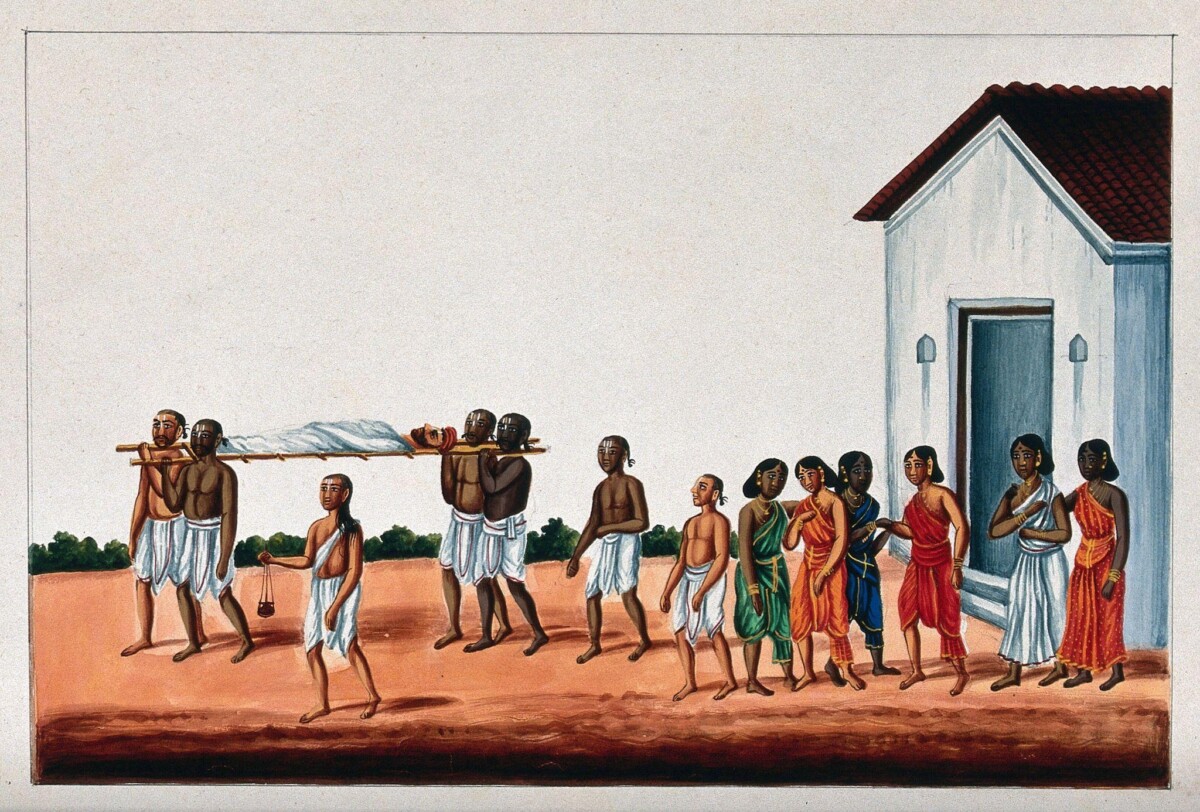
Caption: Relatives carry the departed on a simple bamboo bier from the family home toward the cremation site, accompanied by loved ones in traditional attire.
Step 1: Preparation of the Departed
Upon a loved one’s passing, arrangements for the funeral begin immediately, as it’s ideal (if practical) for the ceremony to be held within 24 hours, allowing the atman a smooth and swift departure. This starts with preparing the body as one would a temple, for though empty now, it served the atman as a sacred vessel.
- Snana (Cleansing): First, the deceased is cleansed with sacred water, giving the bereaved a final, and most poignant, opportunity to care for the body of their loved one.
- Vastra (Dressing): Next, it’s advised the body be adorned in traditional unstitched clothing like a dhoti or saree, signifying the shedding of one’s worldly identity. This helps mourners see them as no longer bound by the attachments they held in life, encouraging a focus on their enduring existence beyond the physical.
- Alankara (Anointment): Finally, sandalwood paste is applied to the forehead, while sacred tulasi leaves are placed on the lips with drops from the Ganges. These gestures carry the family’s aspiration for their loved one to safely move on and attain liberation.
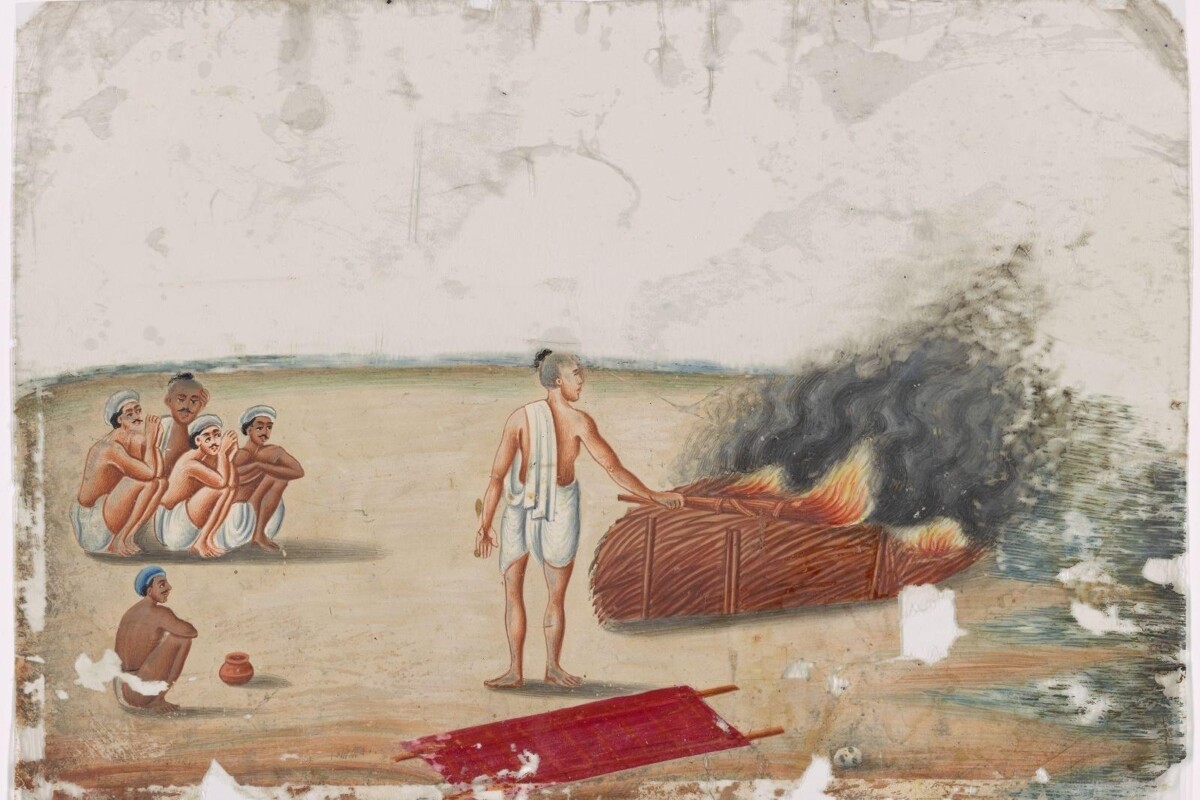
Caption: The chief mourner ignites the funeral pyre beside the water, returning the physical body to the elemental forces while loved ones observe in quiet prayer.
Step 2: The Funeral Service
Before the central ceremony, a solemn vigil is held, where friends, family, and community members gather for a last darshan, or viewing. The deceased is laid with the head facing North toward the realm of liberation, while a single oil lamp burns continuously at the crown. A pandit or elder chants mantras, as mourners offer garlands or flower petals, paying their respects. A eulogy may be given and a soothing message from ancient teachings shared. Traditionally, the body is then taken to the bank of a nearby river where it’s placed on a pyre for cremation. Today, most make this journey from the funeral home to the crematorium.
- Apradakshina (Circumambulation): Guided by a lead mourner, participants begin the final parts of the ceremony by walking counterclockwise around the deceased. The reversed direction symbolizes the unwinding of earthly life, marking a reverent release from the physical.
- Mukhagni (Lighting of the Pyre): Though some choose a burial or opt for other alternatives depending on the context and tradition, most Hindus practice cremation, as fire is considered the best way to return a body to the elements. The lead mourner thus lights the pyre, offering the vessel back to that from which it came. This transforms death into a powerful oblation, freeing the atman from any physical ties.
- Asthi Visarjan (Immersion of Ashes): Eventually, the ashes are collected and immersed in a river — or any other permitted waters. Ashes are chemically inert – they are the cleanest way of returning a body to the environment. The current carries them away, completing the body’s return to the elements.
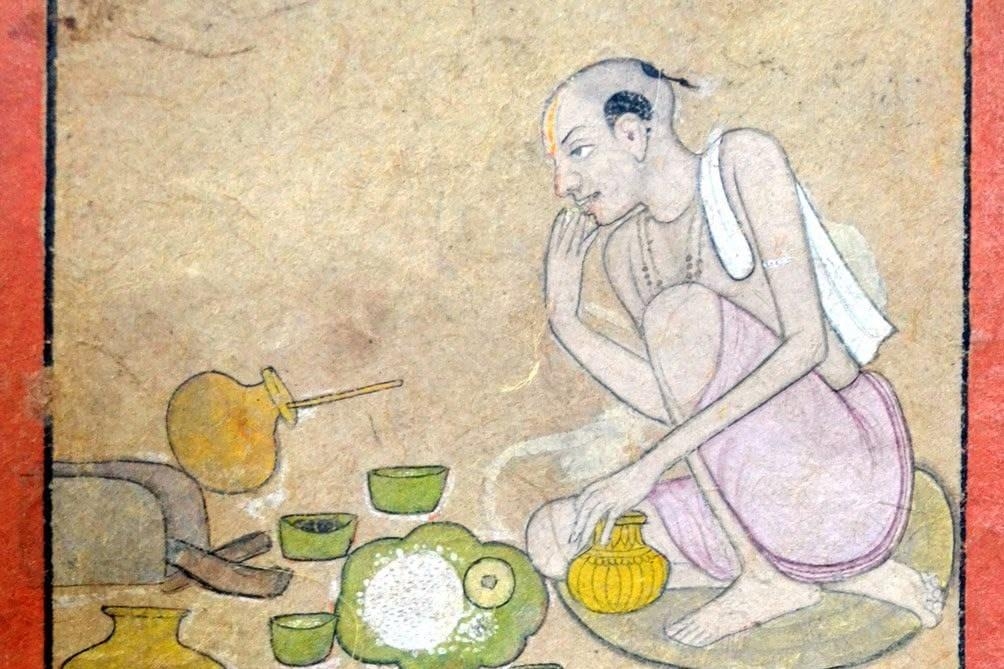
Caption: A man partakes in the ceremonial Sraddha feast, marking the conclusion of the 13-day mourning period.
Step 3: Honoring the Departed
When the funeral ends, the family of the departed return home, where they undertake an official 13-day period of mourning. Though processing a death obviously takes far longer, this window gives mourners the structure and space to really begin navigating their grief in the wake of bidding farewell to their loved one’s body.
- Upasana (Devotional Practices): Some traditions recommend most days be observed with a regimen of dedications, accompanied by spiritual readings to gradually lift one from the depths of grief. Some advocate time with friends and relatives, singing sacred songs and mantras followed by the sharing of meals. Others promote acts of selfless service, while still others propose some combination of the above. Regardless of the approach, Hindus are encouraged to reminisce on times spent with the dearly departed, meditating on their eternal form and nature.
- Sraddha (First-Year Rites): Once the ceremonies come to a close and visitors depart, returning to daily routines is never a clean break — the mere thought of moving on can itself feel overwhelming. Recognizing that grief comes in waves, ancient teachings don’t expect one to simply forget. They offer a variety of paths to help guide the bereaved back to regular life with the utmost sensitivity. Depending on the tradition, these include continued memorials, held every fortnight before culminating in a major one-year observance.
- Pitr Paksa (Ongoing Remembrance): After the first year, remembrances shift from bi-weekly observances to long-term annual ones, dedicated to the ancestors over the period of a fortnight. Be it through formal gatherings, simple ceremonies, or personal acts, the departed are paid homage to and kept alive in memory, inspiring and empowering the living through their lasting love and enduring example.